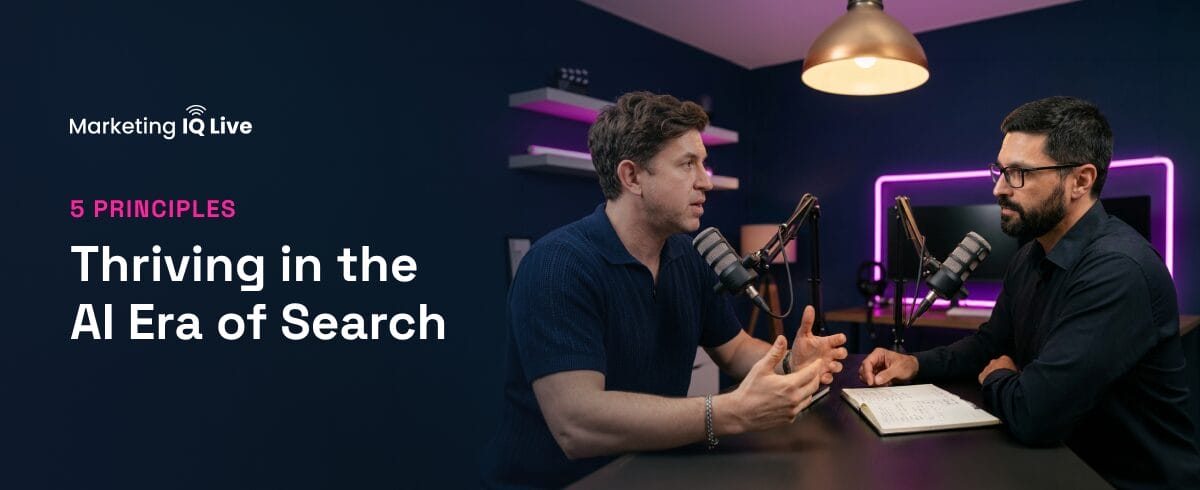
The rapid evolution of AI-powered search has fundamentally reshaped the digital marketing landscape, as discussed by Cristiano Winckler and John Wilkes in a recent Marketing IQ Live session on Paid & SEO in 2026. Businesses that fail to adapt to this new reality risk being left behind. The recent workshop outlined five critical principles that organizations must embrace to thrive in the AI era of search.
1. Integration First
The days of siloed marketing departments are over. “Integration first” means that all departments involved in the digital marketing journey, from web designers and content creators to SEO specialists and paid media teams, must work together seamlessly. “The goal is to create a cohesive, frictionless experience for the user,” notes Cristiano Winckler, Director of Digital Operations at Somebody Digital, “From the initial ad impression to the landing page. If the messaging, visuals, and user experience are not aligned, campaigns will underperform, and eligibility for AI-driven ad auctions may be compromised.
2. Full-Funnel Execution
Focusing solely on bottom-of-funnel demand capture is no longer a sustainable strategy. The new search environment necessitates a full-funnel approach, encompassing every stage of the customer journey, notes Cristiano. This means understanding how users interact with AI Overviews, how their queries are becoming more conversational and context-driven, and how to engage them effectively at each touchpoint. “Organizations must invest in strategies that build brand awareness and nurture leads throughout the entire funnel, not just at the point of conversion.”
3. Creative and Conversion
In an environment where AI is delivering highly contextualized results, the quality of creative assets and the conversion experience are paramount. This includes compelling ad copy, high-quality images and videos, and optimized landing pages. Google’s AI algorithms will prioritize ads and content that offer an exceptional user experience. This means that investing in strong creative and continuous conversion rate optimization (CRO) has become a marketing necessity. “A great ad with a poor landing page experience will simply not qualify leads,” notes John Wilkes, Head of Strategy and Co-Founder of Somebody Digital.
4. Measure What Matters
Traditional metrics focused on individual channel performance are insufficient. In the AI era, organizations must unify their measurement strategies and focus on what truly drives business growth. “This means aligning all teams around shared KPIs, such as revenue, qualified leads (MQLs), and pipeline generation,” says Cristiano. When content, development, and marketing teams are all measured against the same overarching business objectives, it fosters collaboration and ensures everyone is working towards a common goal. This shift in mindset is crucial for breaking down internal barriers and promoting a truly integrated approach.
5. Use AI as a Tool, Not a Replacement
AI is a powerful tool that can augment human capabilities, but it’s not a replacement for human knowledge and expertise. “You can outsource the thinking (brainstorming, idea generation) to AI, but you can’t outsource the expertise and knowledge,” says John. Specialists are still essential to guide AI, interpret its outputs, and ensure that strategies are aligned with business objectives. Companies that leverage AI to enhance their teams’ efficiency and effectiveness, rather than relying on it to operate autonomously, will gain a significant competitive advantage.
The Advantage of Agility
For the first time in a long time, small companies may have an advantage. Their leaner teams and greater agility allow them to adapt more quickly to these changes compared to larger, more traditional organizations. However, regardless of size, all companies must prioritize communication and educate their entire organization about these shifts. Embracing these five principles will be key to navigating the evolving digital marketing landscape and achieving sustained growth in the AI era of search.
What does “Integration First” actually mean in practice?
It means breaking down siloed marketing departments so that web designers, content creators, SEO specialists, and paid media teams all work together toward a cohesive user experience, from the first ad impression through to the landing page. Misaligned messaging, visuals, or UX doesn’t just hurt performance; it can compromise eligibility for AI-driven ad auctions entirely.
Why is a full-funnel approach now essential?
Focusing solely on bottom-of-funnel demand capture is no longer sustainable. As user queries become more conversational and context-driven through AI Overviews, organizations need to engage customers at every stage of the journey, and not just at the point of conversion. Building brand awareness and nurturing leads throughout the funnel has become a core strategic requirement.
How important are creative assets and CRO in an AI-powered environment?
More important than ever. Google’s AI algorithms actively prioritise ads and content that deliver an exceptional user experience, making investment in strong creative and continuous CRO a necessity rather than a nice-to-have. As Joe Wilkes puts it, a great ad paired with a poor landing page experience simply won’t qualify leads.
What needs to change about how organizations measure performance?
Traditional channel-specific metrics are no longer sufficient. Teams need to unify around shared business KPIs like revenue, MQLs, and pipeline generation, so that content, development, and marketing are all pulling in the same direction. Shared measurement breaks down internal barriers and enables genuine integration.
Should AI replace human marketing specialists?
No. AI is a tool for augmenting human capability, not replacing it. As Joe Wilkes notes, you can outsource the thinking (brainstorming, idea generation) to AI, but you can’t outsource expertise and knowledge. Specialists are still essential for guiding AI, interpreting outputs, and keeping strategy aligned with business objectives. Companies that use AI to enhance their teams, rather than operate autonomously, will hold the real competitive advantage.